
Best Translation Tools for Fast & Accurate Results in 2026
Do translation tools really accelerate global growth? While they can’t fully replace human expertise, the right AI-powered translators in 2026 can save hours, reduce errors, and make reaching international audiences much easier. From localizing websites and apps to translating marketing campaigns, these tools help businesses, creators, and teams scale quickly and efficiently.
This blog explores the best translation tools in 2026, highlights what each does best, and outlines their pros and cons so you can quickly find the solution that fits your needs.
Why Translation Tools Matter More Than Ever in 2026
The digital economy has erased borders, but language still plays a key role in user experience. Even a well-designed product can fail if its content feels confusing or foreign to users. Today, companies release updates daily, launch new features weekly, and communicate with users in real time; manual translation workflows can’t keep up.
Modern translation tools solve three major challenges:
- Faster turnaround: Teams can release content quickly across multiple languages.
- Consistency: Terminology, style, and brand voice stay uniform.
- Scalability: Businesses can expand into new markets without rebuilding translation processes from scratch.
This shift has also raised the human vs. AI translation debate. Many organizations now adopt hybrid approaches:
- AI provides speed and efficiency.
- Humans ensure nuance, context, and cultural sensitivity.
The best translation tools in 2026 are those that combine the strengths of both effectively.
What Makes a Great Translation Tool in 2026
Not all translation tools are created equal. In 2026, the most effective platforms share several key characteristics:
- Accuracy: A strong tool understands context, industry-specific terms, and sentence structure, instead of just translating word by word.
- Speed: Fast performance is essential, especially for teams handling continuous content updates. Features like automation, real-time collaboration, and integrations with content management systems help streamline workflows.
- Localization Support: Translation alone isn’t enough. Content must adapt to cultural norms, regional preferences, and local expectations. Understanding the difference between translation and localization is critical for global success.
- Usability: Teams prefer tools that are easy to adopt, flexible enough to fit existing workflows, and transparent in pricing.
The following tools in 2026 stand out for meeting these needs effectively.
1. Google Translate
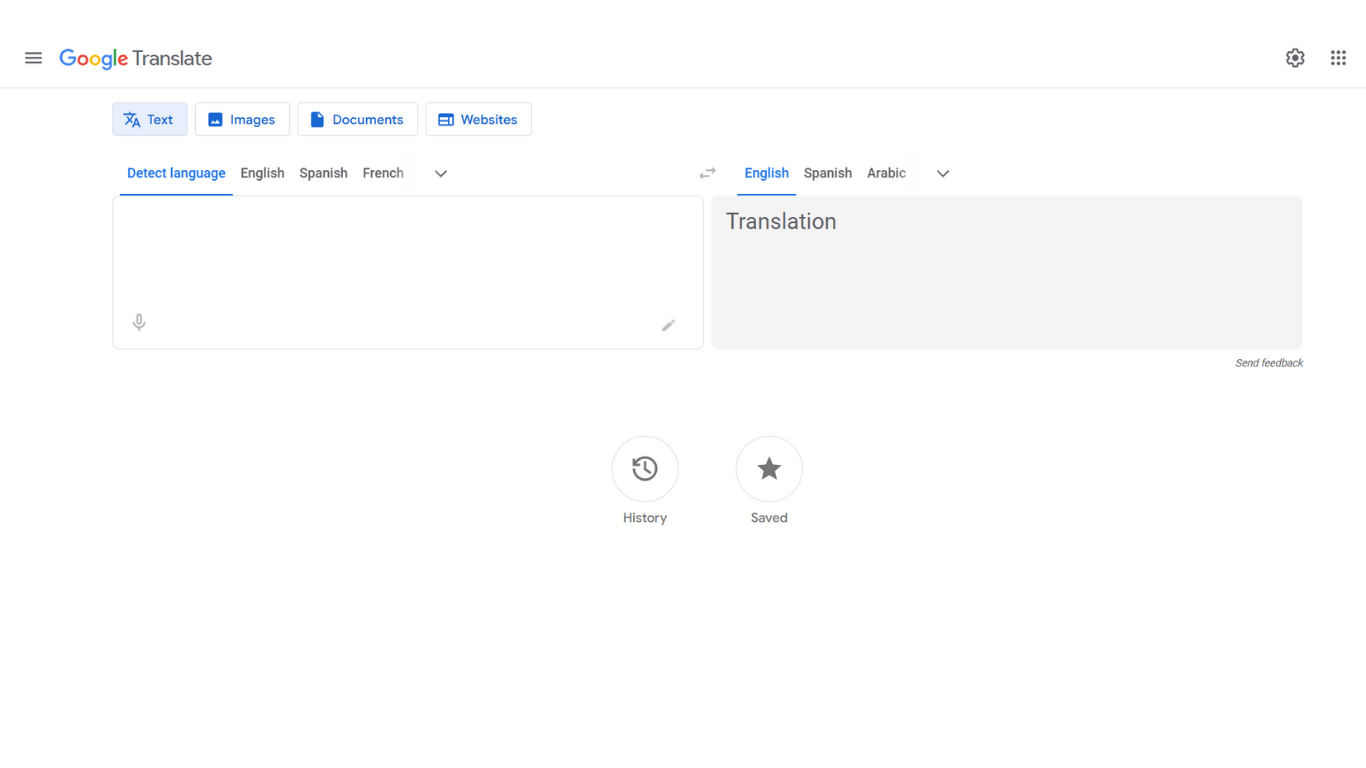
Google Translate is one of the most widely recognized translation tools in the world. It is commonly used for quick translations, basic communication, and understanding foreign-language content.
In 2026, Google Translate continues to rely on advanced neural machine translation models that improve speed and general accuracy. It supports text, documents, images, and web pages, making it extremely accessible for everyday use.
Pros
- Completely free for most use cases
- Extremely fast and easy to access
- Supports a very wide range of languages
- Useful for quick understanding and informal communication
Cons
- Output often lacks natural tone and cultural context
- Not reliable for professional, legal, or marketing content
- Limited control over terminology and consistency
Google Translate works best as a quick reference tool rather than a solution for business-critical translation needs.
2. DeepL
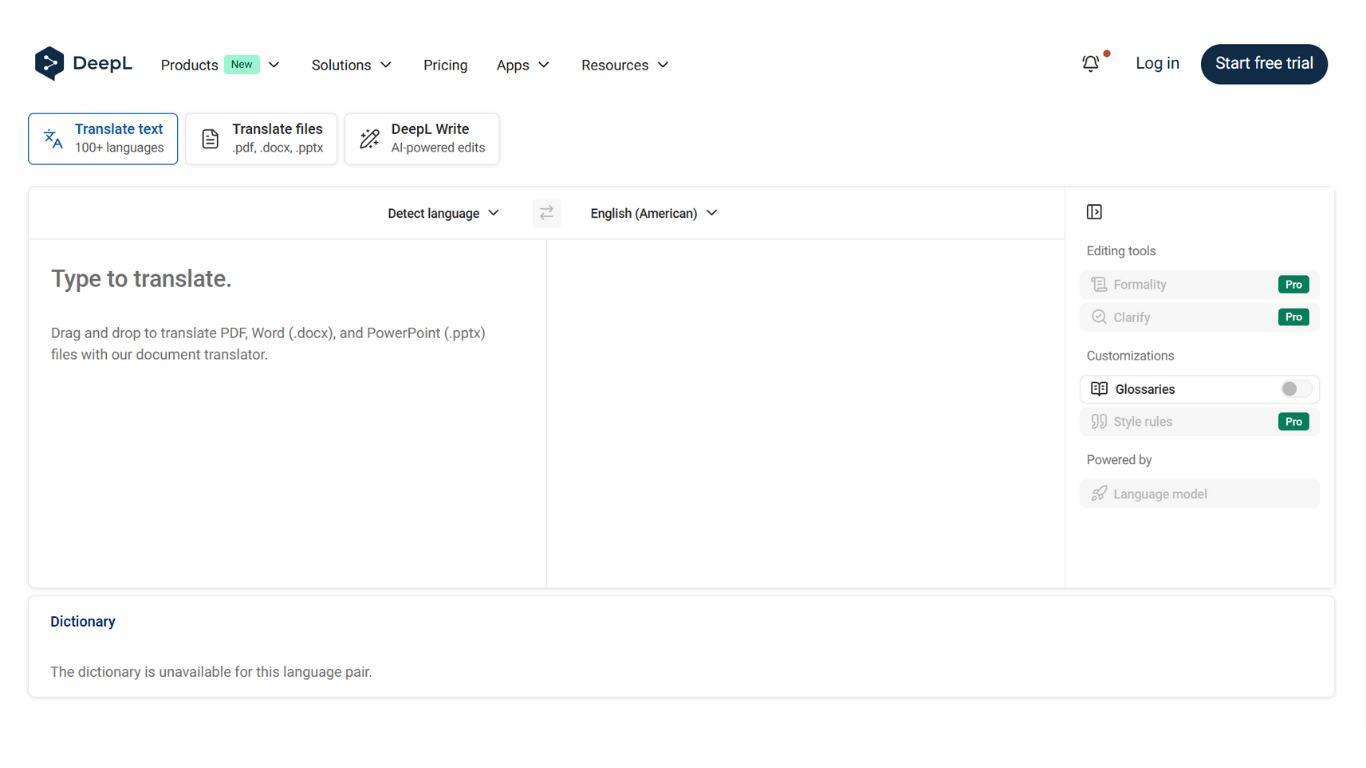
DeepL is known for delivering more fluent and natural-sounding translations compared to many other AI-based tools. It focuses heavily on sentence structure, context, and readability, which makes its output feel closer to human writing.
In 2026, DeepL is widely used by professionals who need higher-quality translations without immediately involving human translators. It supports document uploads, glossaries, and customization for specific terminology.
Pros
- Produces highly natural and readable translations
- Strong performance for business, technical, and formal content
- Supports document translation and glossary management
Cons
- Language support is more limited than some competitors
- Advanced features require a paid subscription
DeepL is a strong choice for teams that prioritize quality and clarity over sheer language coverage.
3. Microsoft Translator
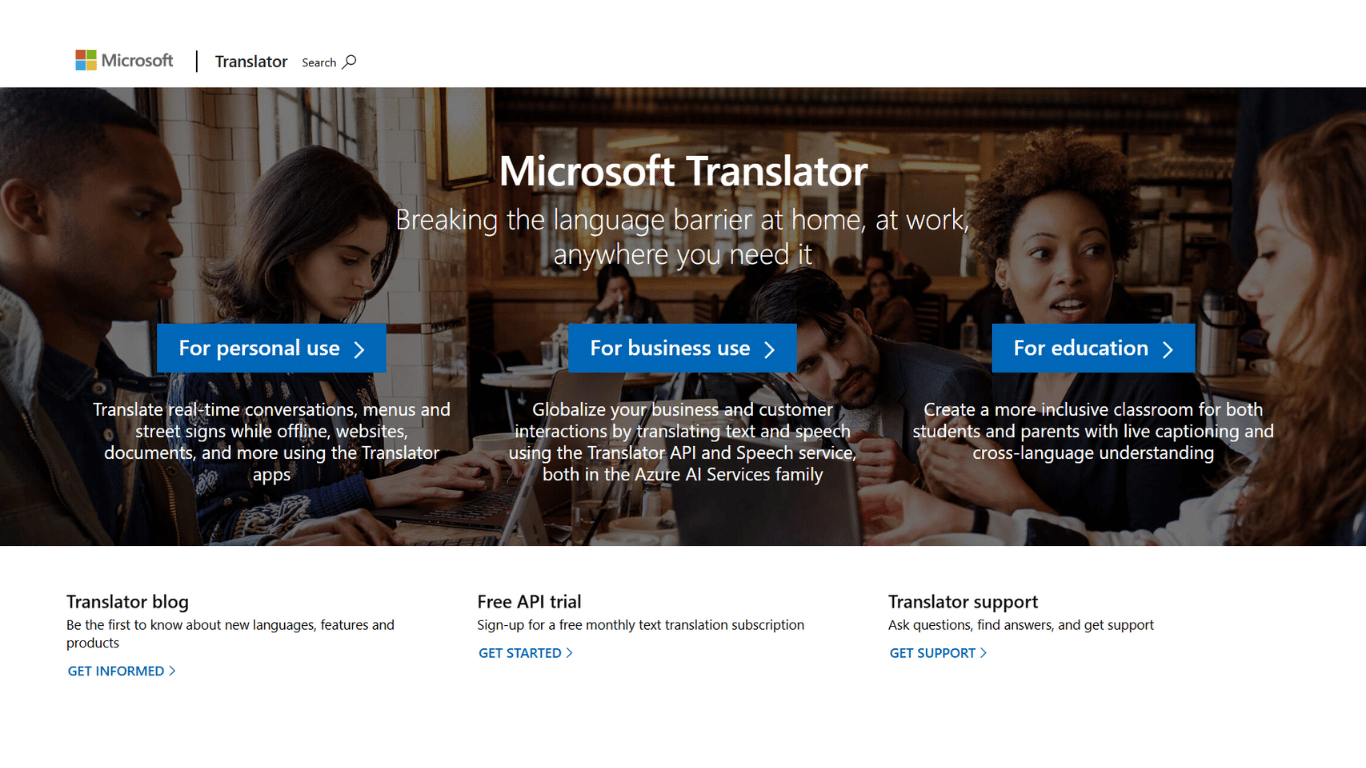
Microsoft Translator is designed for organizations that operate within the Microsoft ecosystem. It enables real-time translation for conversations, meetings, documents, and applications.
By 2026, it has become a dependable option for enterprises that need scalable translation services integrated into daily workflows. Its cloud-based API allows developers to embed translation features directly into products and platforms.
Pros
- Seamless integration with Microsoft Office, Teams, and Azure
- Real-time translation for meetings and collaboration
- Scalable for large organizations and enterprise use
Cons
- Output can feel less natural compared to specialized AI tools
- Best suited for users already invested in Microsoft products
Microsoft Translator is well suited for internal communication and enterprise-level translation requirements.
4. Smartcat
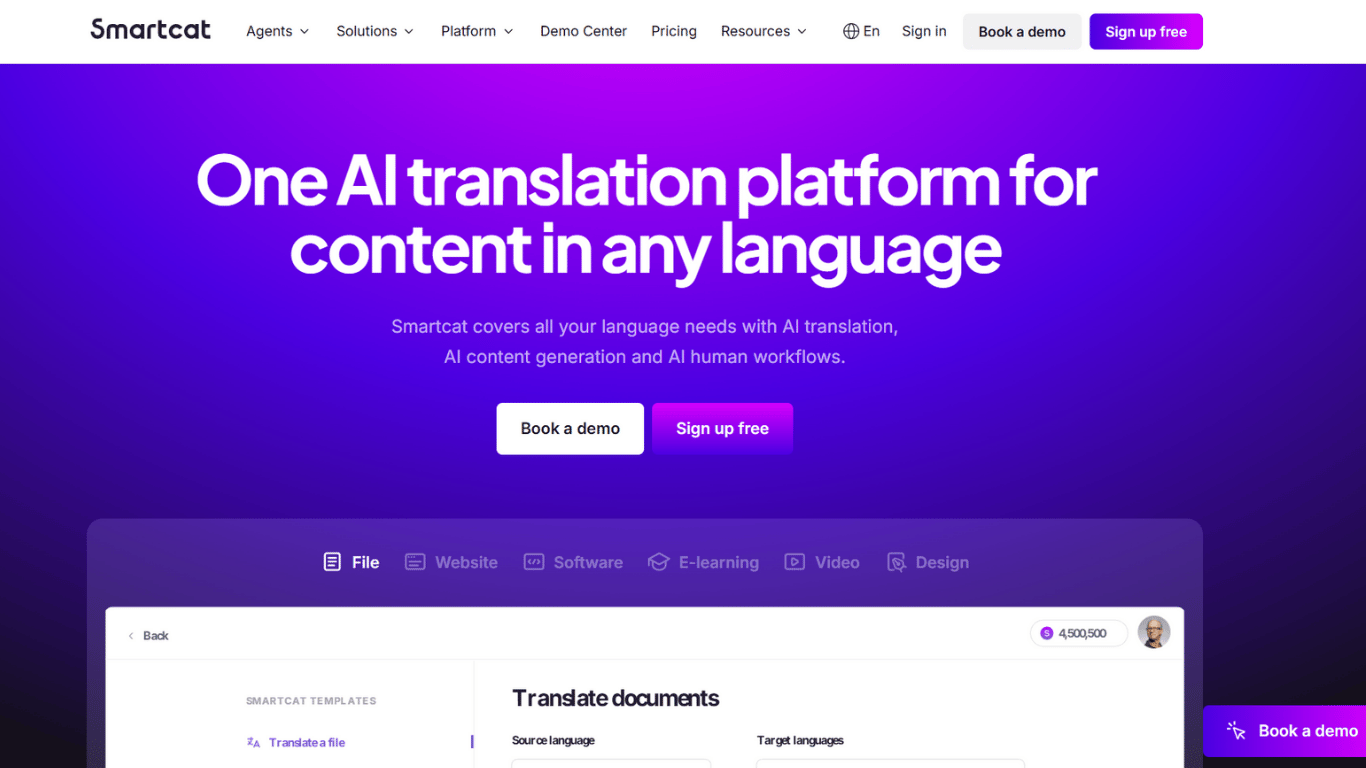
Smartcat is a collaborative translation platform that combines AI-powered translation with access to professional human linguists. It is built for teams that manage ongoing translation work and need both speed and quality.
Smartcat allows users to automate repetitive translation tasks while keeping humans in the loop for review and refinement. This hybrid approach helps reduce errors and maintain brand consistency across languages.
Pros
- Combines AI translation with human review in one platform
- Good collaboration features for distributed teams
- Transparent pricing and scalable workflows
Cons
- Interface can feel complex for new users
- Best suited for continuous or large-scale projects
Smartcat is ideal for companies that want flexibility and human oversight without slowing down delivery.
5. Lokalise
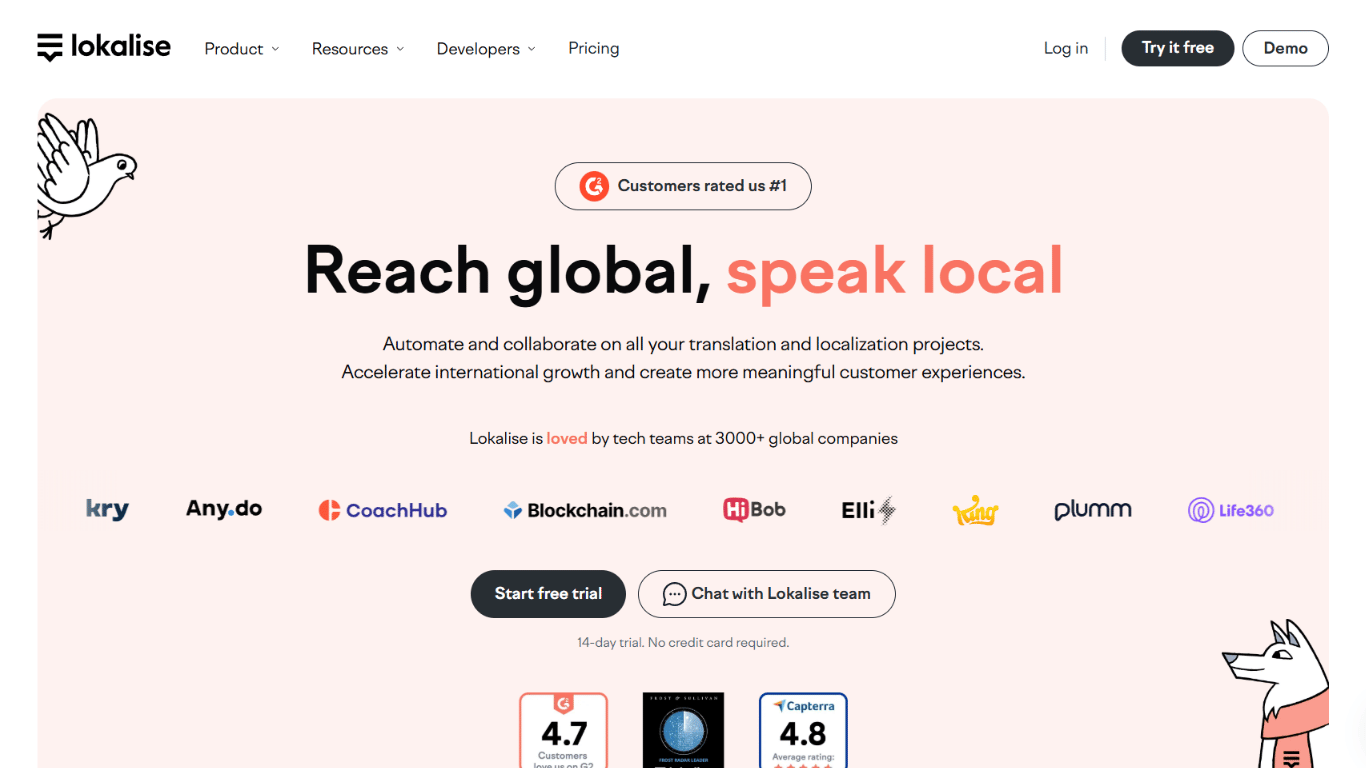
Lokalise is a localization management platform widely used by product, engineering, and design teams. It focuses on translating digital products such as websites, mobile apps, and software interfaces.
The platform integrates smoothly with development tools, enabling teams to update content across languages without disrupting release cycles.
Pros
- Strong integrations with development and design tools
- Ideal for website localization and product-led teams
- Supports agile and continuous deployment workflows
Cons
- Less suitable for long-form editorial or marketing content
- Pricing may be high for small teams
Lokalise works best for companies building and maintaining global digital products.
6. Crowdin
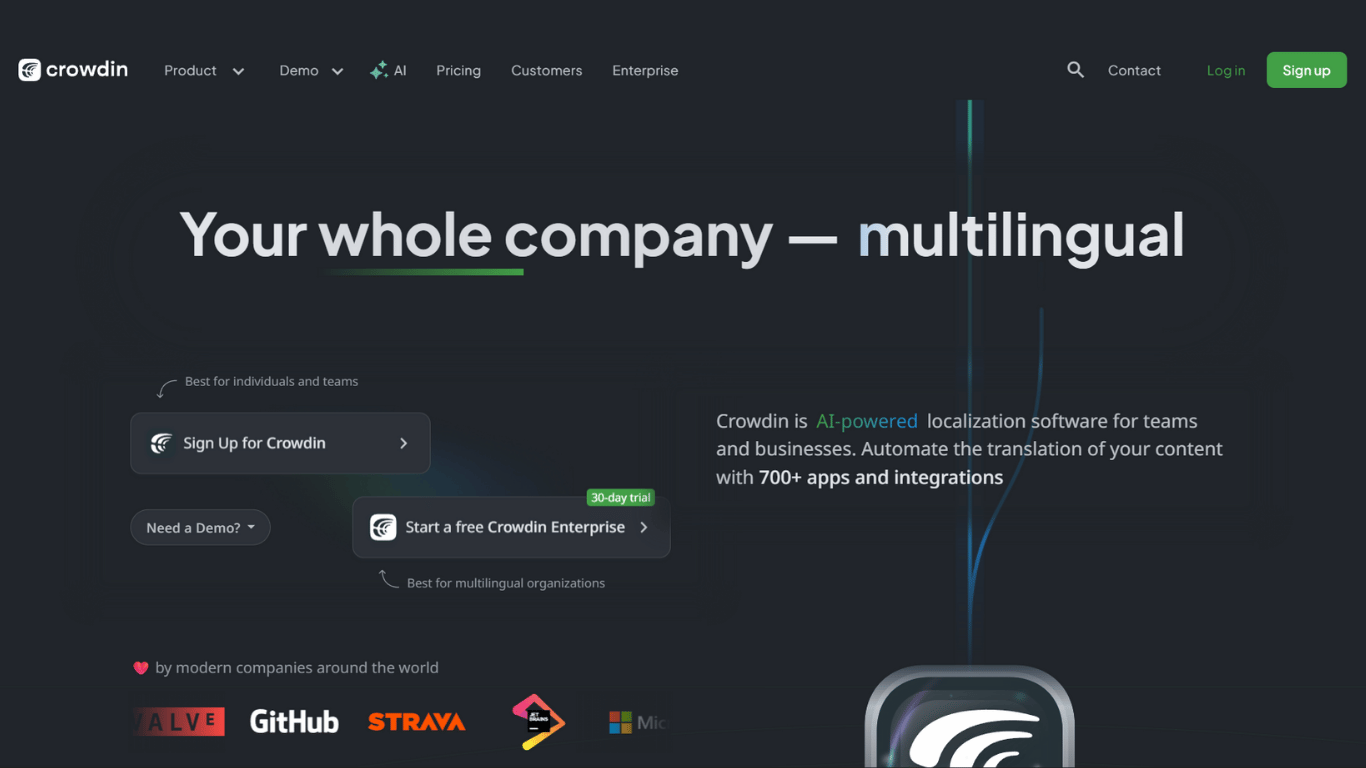
Crowdin is a powerful localization platform designed for developers, SaaS companies, and game studios. It supports automation, version control, and collaborative translation workflows.
Crowdin is especially popular in Game Localization, where frequent updates and multilingual releases are required.
Pros
- Strong automation and version control features
- Well suited for software and game projects
- Supports community and team-based translation
Cons
- Can feel technical for non-developers
- Requires setup time for complex projects
Crowdin helps teams manage large-scale localization efficiently while maintaining translation quality.
7. Clocale
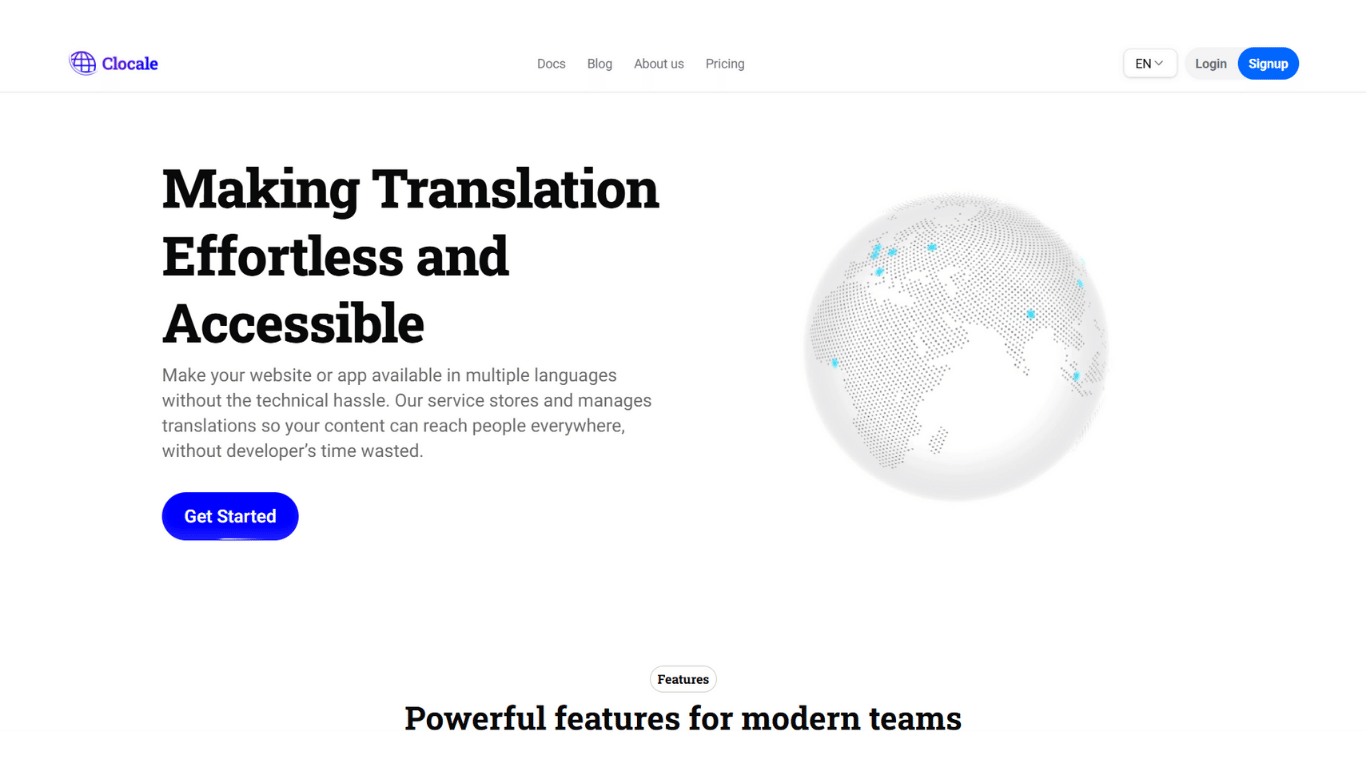
Clocale is a cutting-edge translation and localization platform designed to simplify and scale multilingual content management for modern businesses. Unlike one-off translation tools, it centralizes all your localization efforts, making it easy to manage websites, applications, marketing content, and documentation in over 100 languages.
By combining AI-powered translation with human quality control, Clocale ensures fast, accurate, and culturally sensitive translations, helping businesses communicate effectively across global markets.
Pros
- Continuous localization and streamlined workflows streamline translation processes and make expanding into global markets easier.
- In-Context Editing lets you edit translations directly in your app and see updates instantly.
- Developer-Friendly & Centralized Management manages all translation projects through SDKs, APIs, and a single platform.
- Balanced AI & human translation with collaboration provides fast, accurate translations while efficiently tracking team progress.
Cons
- Not intended for casual or single-use translations
- Best suited for growing businesses and global teams rather than individual users
Clocale is ideal for organizations looking for long-term localization success and consistent global communication.
How to Choose the Right Translation Tool in 2026
With so many translation tools available, choosing the right one depends on your specific needs, workflows, and audience:
- Quick or informal translations: Simple tools can be enough for personal use, understanding basic content, or casual communication.
- Customer-facing content: Maintaining brand voice and earning global user trust depends on accurate translations, consistent messaging, and reliable localization support.
- Product teams and developers: Tools that integrate seamlessly with existing workflows, content management systems, or APIs save time and reduce manual work.
- Growing global companies: Platforms that scale easily allow businesses to expand into new markets without needing to rebuild translation processes from scratch.
Before selecting a tool, assess your content volume, target markets, and whether your priority is speed, quality, or a balance of both. Thinking through these factors ensures you invest in a solution that not only meets immediate needs but also supports sustainable long-term growth.
Conclusion
In 2026, effective translation is no longer optional. It is a key part of successful global communication. The right translation and localization tools help you work faster, maintain a natural tone, and engage international audiences more effectively.
By choosing a solution that aligns with your goals and workflows, you can transform language from a barrier into a strategic advantage, enabling your business to expand confidently into new markets.
FAQ
Which translation tool provides the most accurate results?
The most accurate translation tool depends on the type of content. AI-powered translators with neural networks usually deliver more natural, context-aware translations, while traditional tools often perform better for technical, legal, or highly structured content.
Many professionals combine AI tools with human proofreading to ensure the highest accuracy and preserve tone.
What are the best online translation tools in 2026?
Several platforms stand out in 2026 for their performance and versatility:
Top Choices:
- DeepL Translator: Natural, human-like translations, especially for European languages.
- Google Translate: Broad language support with instant text, voice, and camera translations.
- Microsoft Translator: Integrated with Microsoft apps, ideal for text, speech, and image translations.
- Yandex Translate: Fast translations for 100+ languages with transliteration.
- Wordly.ai: Real-time captions and translations for meetings and events.
- ChatGPT: Context-aware translations that adapt tone and style.
The best tool depends on your needs—whether casual conversation, business localization, or professional content creation.
How effective is Google Translate in 2026?
Google Translate continues to be one of the most widely used translation tools in 2026. It excels in speed and language coverage, making it perfect for travelers, students, and casual users who need quick translations. Over the years, its neural machine translation engine has improved context recognition and phrasing, yet it can still struggle with complex sentence structures, idiomatic expressions, and highly specialized or technical content.
Is ChatGPT better than Google Translate?
ChatGPT excels when context, tone, and natural language flow matter. It can:
- Understand conversational and creative text
- Adapt tone, style, and formality
- Provide smoother, more natural translations across multiple sentences
However, for quick, word-for-word translations, Google Translate is still faster and convenient.
What does the future hold for translation technology?
The future of translation technology is focused on creating smarter, human-like communication. Advanced AI models are expected to better understand cultural nuances, idioms, and context, making translations feel natural and localized.
Real-time voice and video translation will become more mainstream, bridging communication gaps in meetings, conferences, and online interactions. Additionally, support for regional and low-resource languages will expand, ensuring global accessibility.