
Types of Localization Explained: Ultimate Guide
Going global sounds exciting, until you realize your product does not connect the same way everywhere. Your website looks polished, your app works smoothly, and your message is clear, yet users in certain regions hesitate, drop off, or never fully engage. This is one of the key reasons why global businesses fail by ignoring localization.
This is where localization becomes essential. Different markets require different approaches, and not all localization works the same way. Adapting a website is very different from localizing software, marketing campaigns, or digital experiences.
This guide explores the main types of localization in detail. Each section explains what the type involves, why it matters, and how it works in real situations. By the end, businesses, marketers, and product teams will have a clearer understanding of which type of localization fits their needs and how to apply it effectively across markets.
What Is Localization?
Localization is the process of tailoring a product, website, or app so it feels natural and intuitive for users in a specific region. It goes beyond basic language conversion and addresses the broader debate of translation vs localization.
This includes adjusting visuals, text, tone, formatting, functionality, and even subtle details like colors, symbols, or humor. Translation is a key component, but localization goes a step further by asking, “Will this make sense to someone in this market?” rather than only “How do I say this in another language?”
When done right, localization ensures that users don’t feel like they’re interacting with a global template. The product feels familiar, trustworthy, and designed just for them, which boosts engagement, satisfaction, and long-term loyalty.
Types of Localization
You might be wondering, what parts of a product actually need localization? The answer is nearly everything your user touches. This can range from websites and apps to software, games, legal policies, multimedia, marketing content, and beyond.
Next, we’ll dive into the key types of localization, showing real-world examples for each so you can see exactly how they bring products to life for local audiences.
Linguistic Localization
Linguistic localization focuses on adapting language so it sounds natural, clear, and appropriate for a specific audience. It goes far beyond direct translation by addressing tone, sentence structure, word choice, spelling, and regional expressions.
Even when the same language is used across countries, people expect content to reflect how they actually speak.
Some cultures prefer direct language, while others expect softer or more respectful phrasing. Poor linguistic localization is a common example of localization mistakes, often resulting in content that feels robotic or untrustworthy.
How Uber Eats Localizes: Comparing the US and UK
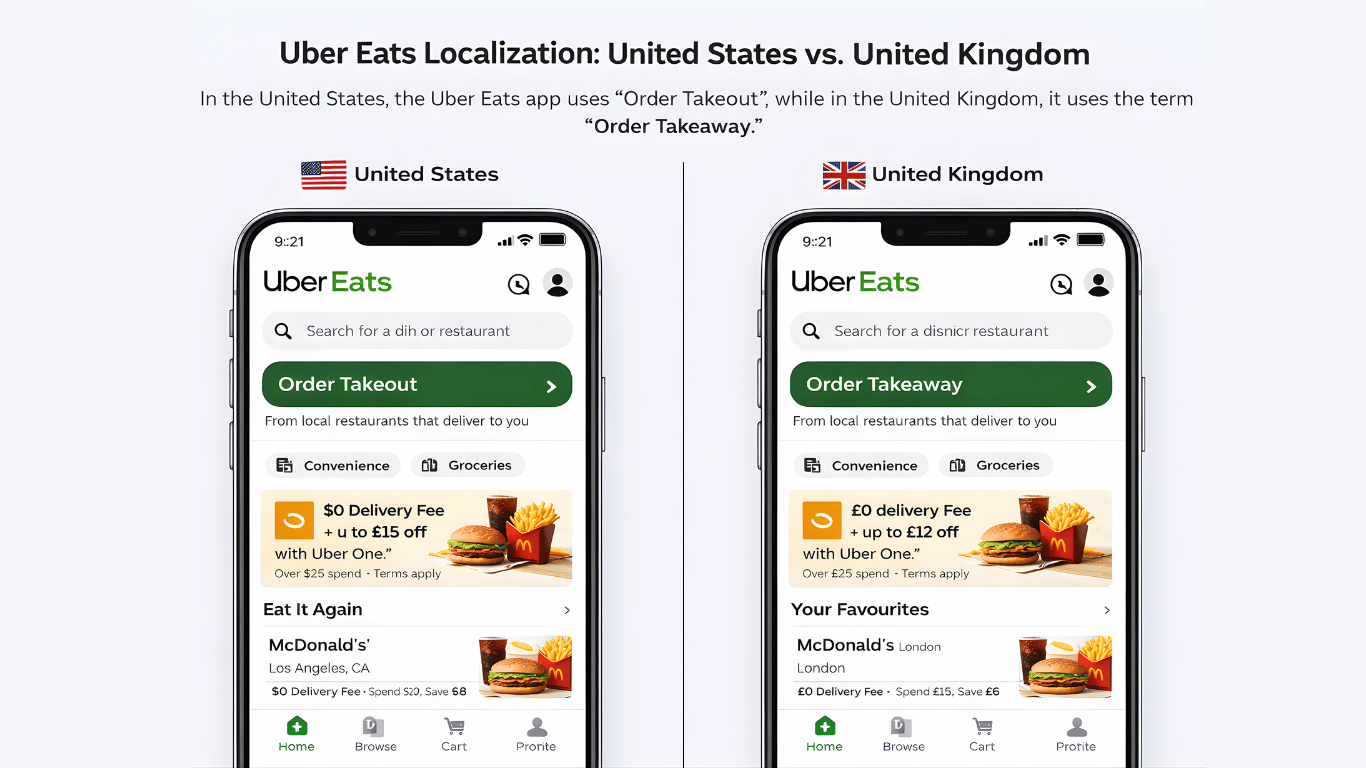
Uber Eats is a wonderful real-world example. In the United States, the app uses terms like “Order Takeout” to describe ordering food from restaurants. When the app is localized for the United Kingdom, the same feature is labeled “Order Takeaway.” The service works exactly the same, but using the familiar UK term makes the app feel tailored to local users.
Another example is DoorDash, which also adapts its menu labels, promotions, and notifications depending on the country, using local terminology, spelling, and currency so users feel the experience was made specifically for their region.
Cultural Localization
Cultural localization adapts content to align with local values, beliefs, customs, and social norms. This includes images, colors, symbols, gestures, humor, and references that may carry different meanings across cultures.
Ignoring cultural nuances is one of the biggest localization challenges global brands face. What feels friendly in one region may feel unprofessional or offensive in another. Cultural localization helps brands avoid misunderstandings while building emotional connections with local audiences.
How McDonald’s Adapts Culturally in Different Markets
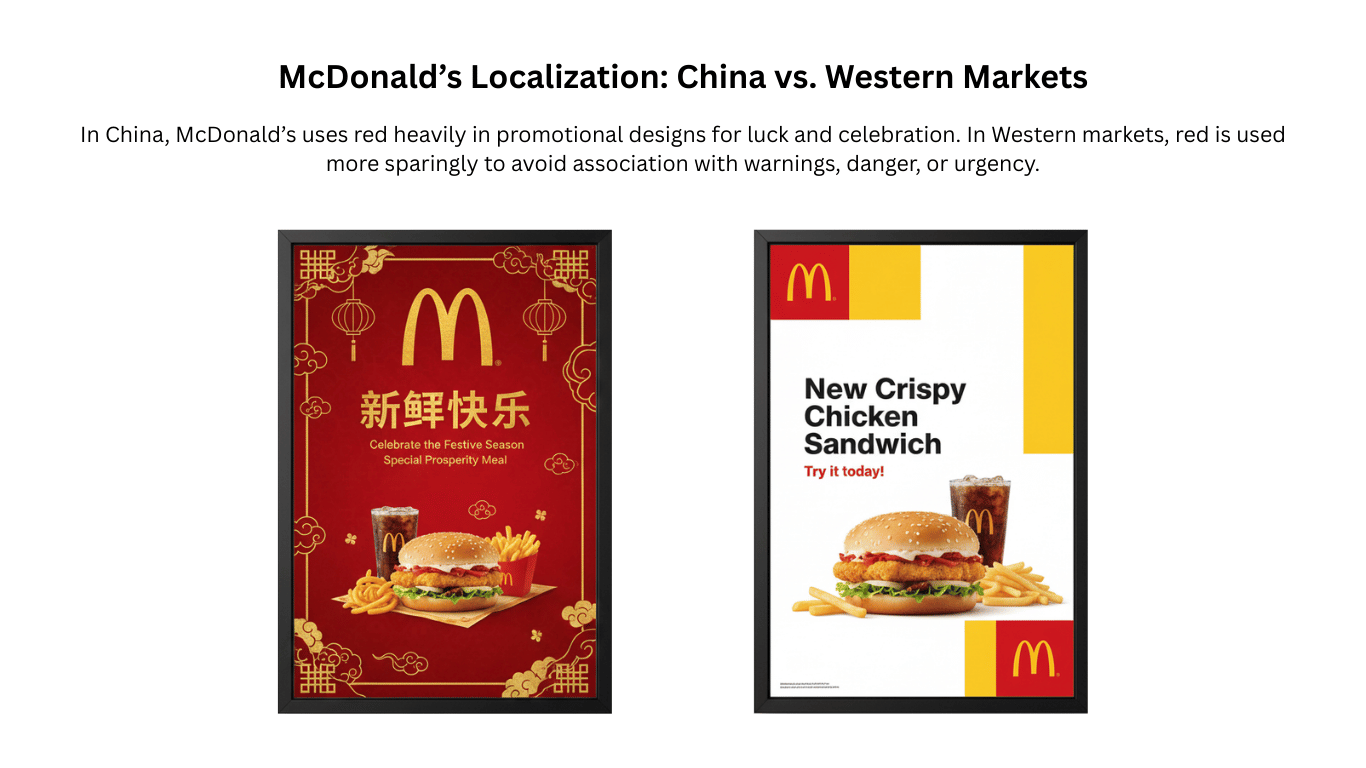
When McDonald’s runs promotions in China, it often uses red and gold heavily in its marketing materials. Red represents good luck, prosperity, and celebration in Chinese culture, which makes campaigns feel festive and appealing.
In contrast, in Western countries, McDonald’s avoids using red in the same way for cultural messaging, because red can be associated with warnings, danger, or urgency. Instead, it relies on its standard brand colors and other culturally neutral elements to convey excitement without unintended meanings.
Technical Localization
Technical localization ensures that a product works correctly and smoothly in a specific region. It focuses on functional details such as date and time formats, currencies, number systems, units of measurement, and character encoding.
This type of localization also considers local devices, operating systems, screen sizes, and internet conditions. Without technical localization, users may struggle to understand prices, schedules, or system messages, even if the language is correct.
How QuickBooks Adapts for Different Countries
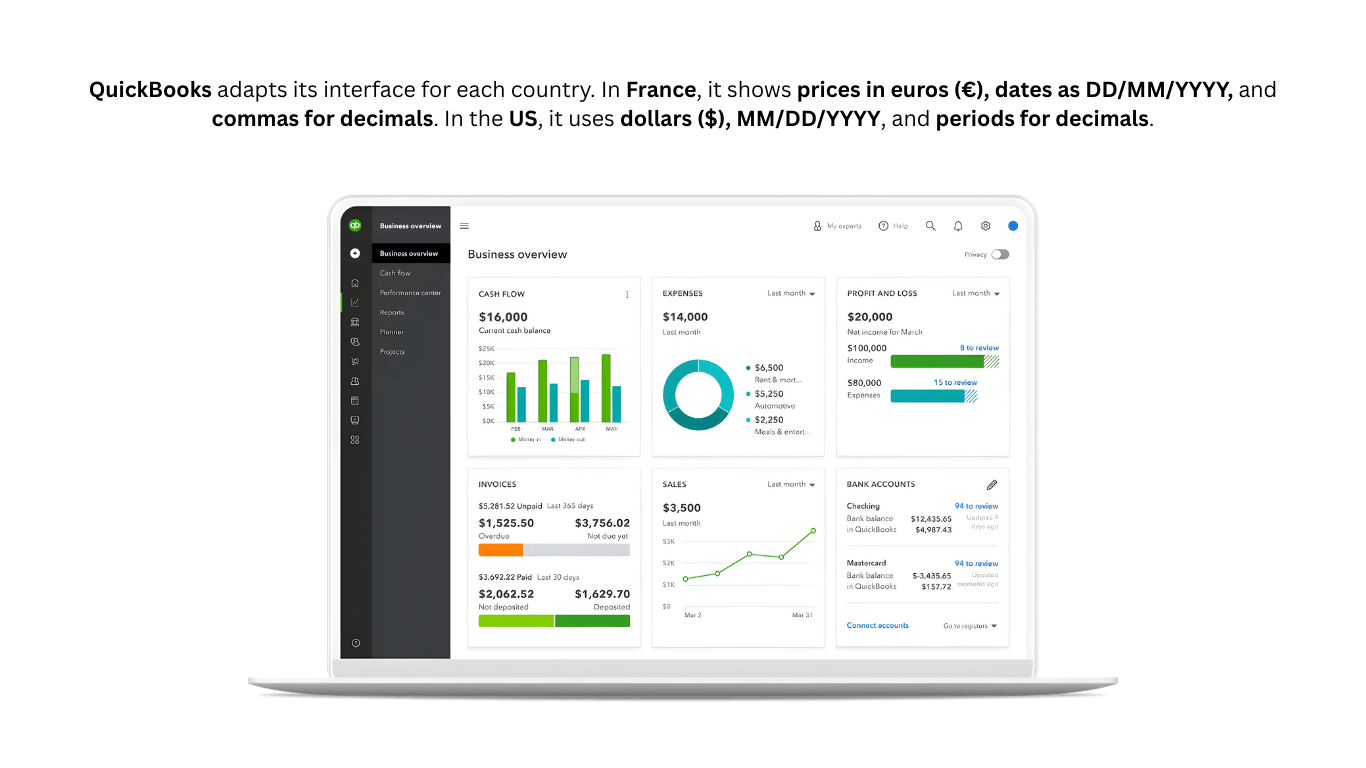
QuickBooks, a popular accounting software, adapts its interface for different countries. In France, the software displays prices in euros (€), formats dates as DD/MM/YYYY, and uses commas for decimal separators instead of periods, following local conventions.
This ensures that French users can read reports, invoices, and financial summaries without confusion. The same software in the US, for example, shows prices in dollars ($), dates as MM/DD/YYYY, and uses periods for decimals.
Website Localization
Website localization adapts a website so it feels natural and relevant to users in different regions. This includes localized text, images, navigation structure, calls to action, SEO elements, and legal pages.
It also ensures that the website reflects local user behavior and expectations. Navigation styles, content hierarchy, and trust indicators may need adjustment depending on the region.
Udemy Localization for Brazil
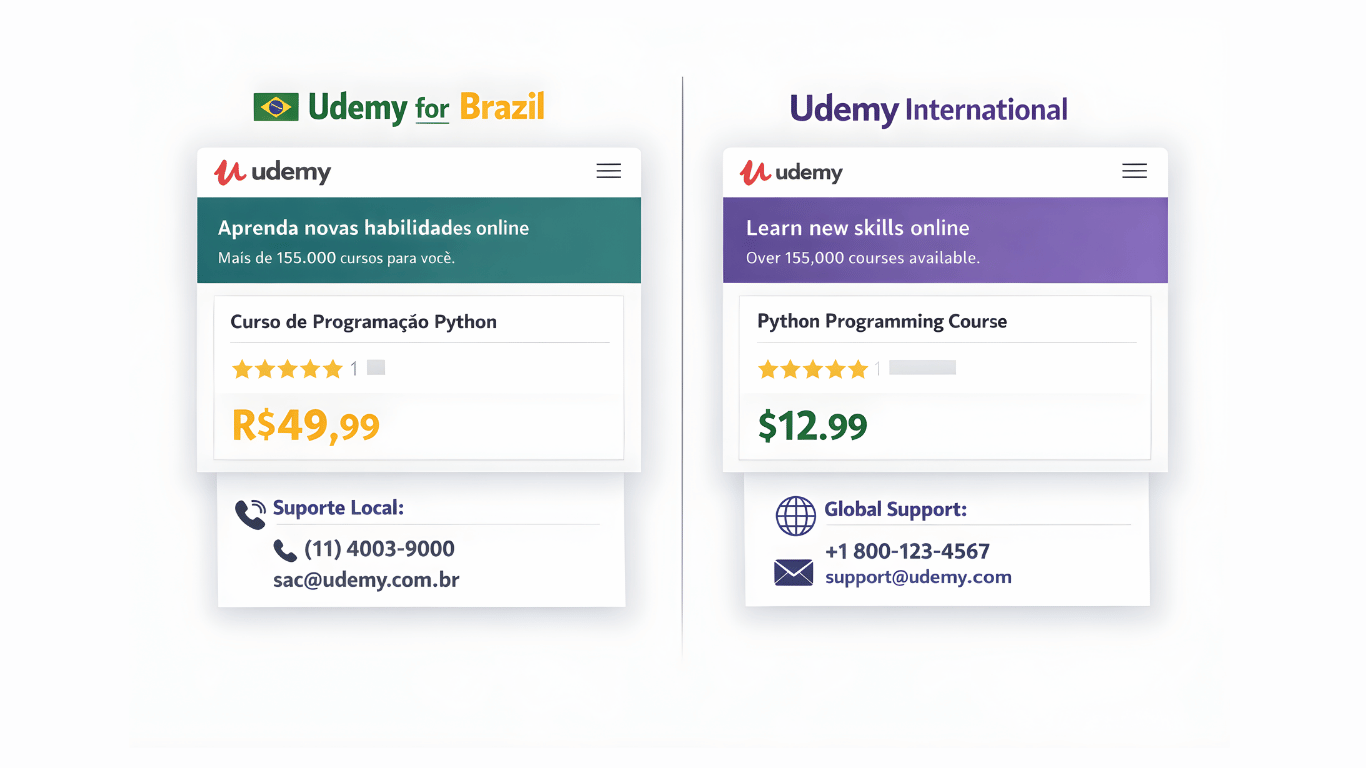
Udemy, a popular online learning platform, displays course prices in Brazilian Real (R$) for users in Brazil and shows local support information tailored to the region. This makes it easier for Brazilian learners to understand costs, navigate the site confidently, and trust the platform, compared to showing prices in USD or generic global contact details.
Software and Application Localization
Software and application localization focuses on adapting digital products such as desktop software, mobile apps, and cloud platforms. It includes menus, buttons, system messages, error notifications, and onboarding flows.
This type of localization must account for space limitations, text expansion, accessibility, and language direction. A well-localized application feels intuitive and easy to use, regardless of the user’s location.
Microsoft Office and HSBC Mobile Banking App
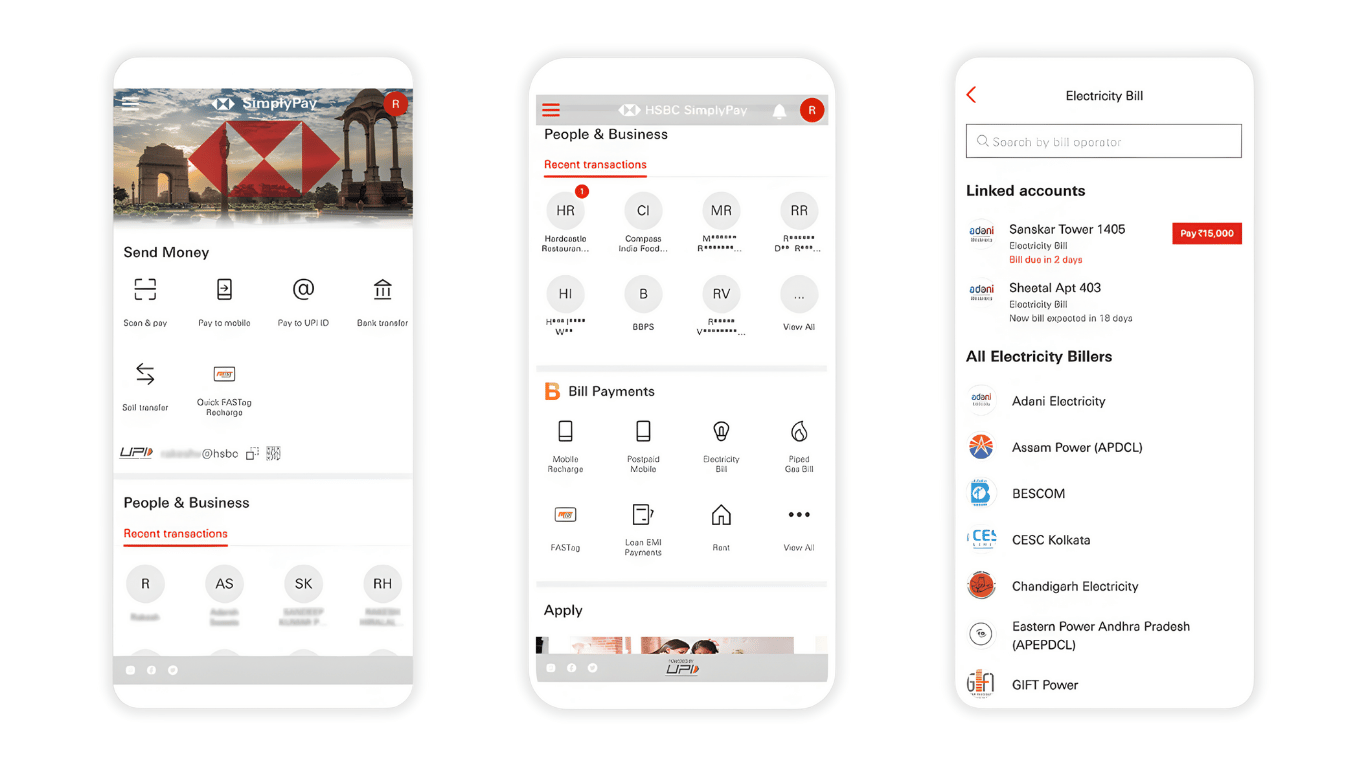
-
Software Localization (Microsoft Office): Microsoft Office adapts its interface, menus, and help content for different regions. For example, in Germany, Office displays menu items, tooltips, and system messages in German, while also adjusting date formats, currency symbols, and spell-check dictionaries to match local conventions.
-
Application Localization (HSBC Mobile Banking): HSBC’s mobile banking app localizes button labels, menus, and error messages for different markets. In India, users see content in Hindi or regional languages, while in France it appears in French. This makes navigation and transaction processes clear, reducing user confusion and support requests.
Marketing Localization
Marketing localization adapts promotional content so it resonates emotionally with local audiences. This includes advertisements, campaign messages, social media content, and brand slogans.
Rather than translating words directly, marketing localization focuses on intent, emotion, and persuasion. It often requires creative rewriting to maintain impact while respecting cultural differences.
Nike’s “Just Do It” Campaign
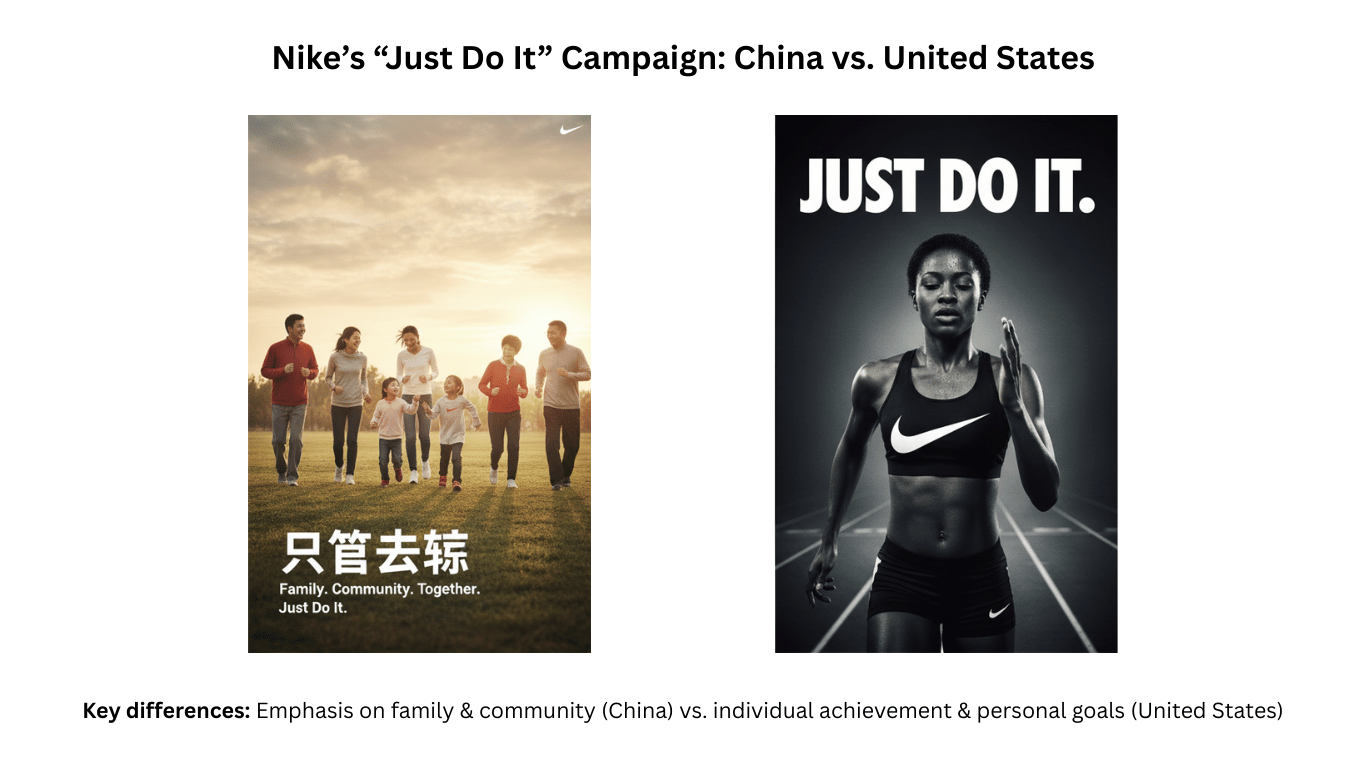
Nike adapts its iconic “Just Do It” slogan for different countries to better resonate with local audiences. For example, in China, Nike has emphasized community, perseverance, and family-oriented fitness messages in marketing campaigns, while in the United States, the campaigns focus more on individual achievement and personal goals.
The core brand message encouraging people to be more active remains the same, but the localized campaigns connect better with cultural values and motivations in each market.
E-commerce Localization
E-commerce localization focuses on the entire online shopping experience. It includes product descriptions, pricing formats, payment methods, checkout flows, delivery information, and customer support content.
Trust is especially important in e-commerce. Local payment options, clear return policies, and familiar language help users feel confident when making purchases.
Daraz Nepal Payment Localization
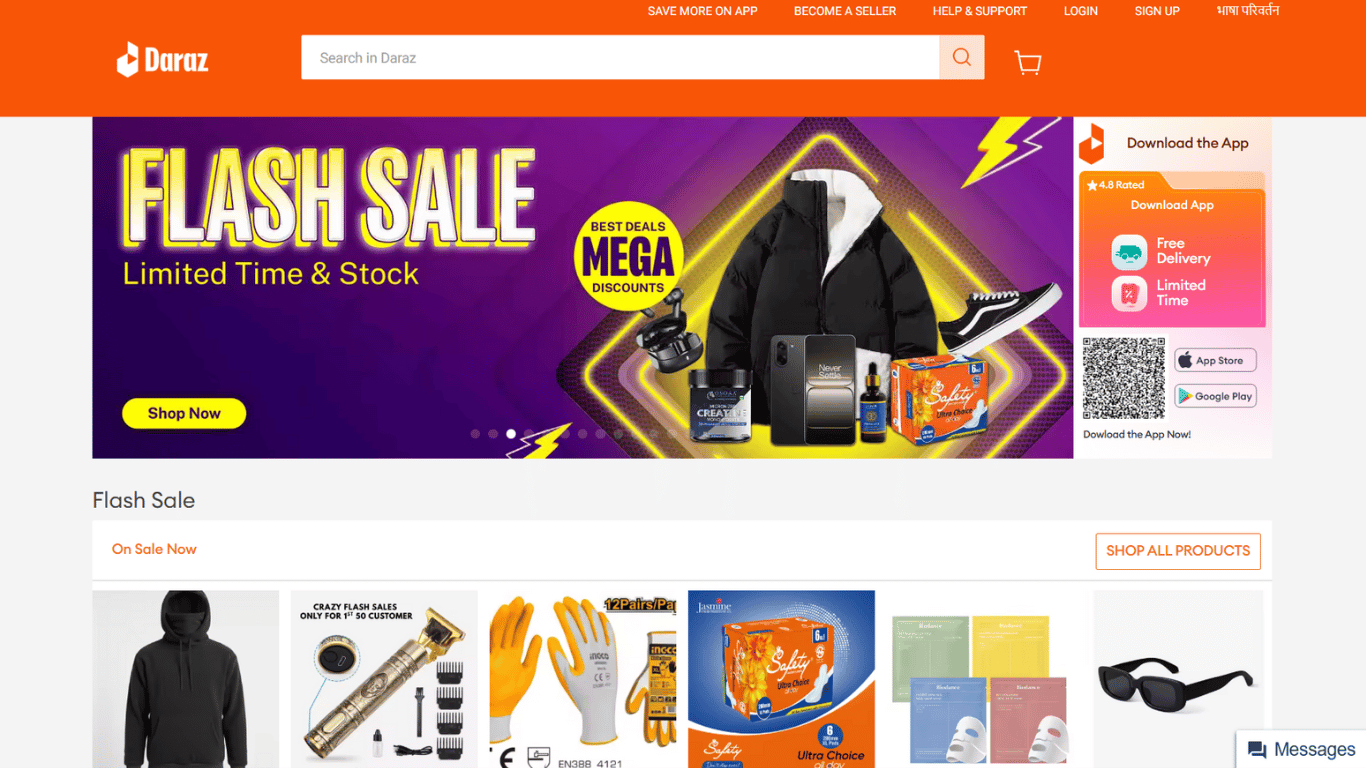
Daraz, a leading e-commerce platform in Nepal, prioritizes Cash on Delivery (COD) as one of its main payment options. Since many Nepali customers prefer paying after receiving their orders, COD helps build trust and encourages more people to shop online.
By adapting payment methods to local buying behavior, Daraz increases conversions and makes the shopping experience more comfortable for Nepali users.
Legal and Regulatory Localization
Legal and regulatory localization ensures that content complies with local laws and regulations. This includes privacy policies, terms and conditions, consent notices, and consumer rights information.
Different regions have different legal standards, and failing to localize legal content can result in fines or restrictions. Legal localization protects both businesses and users.
Google Workspace GDPR Localization
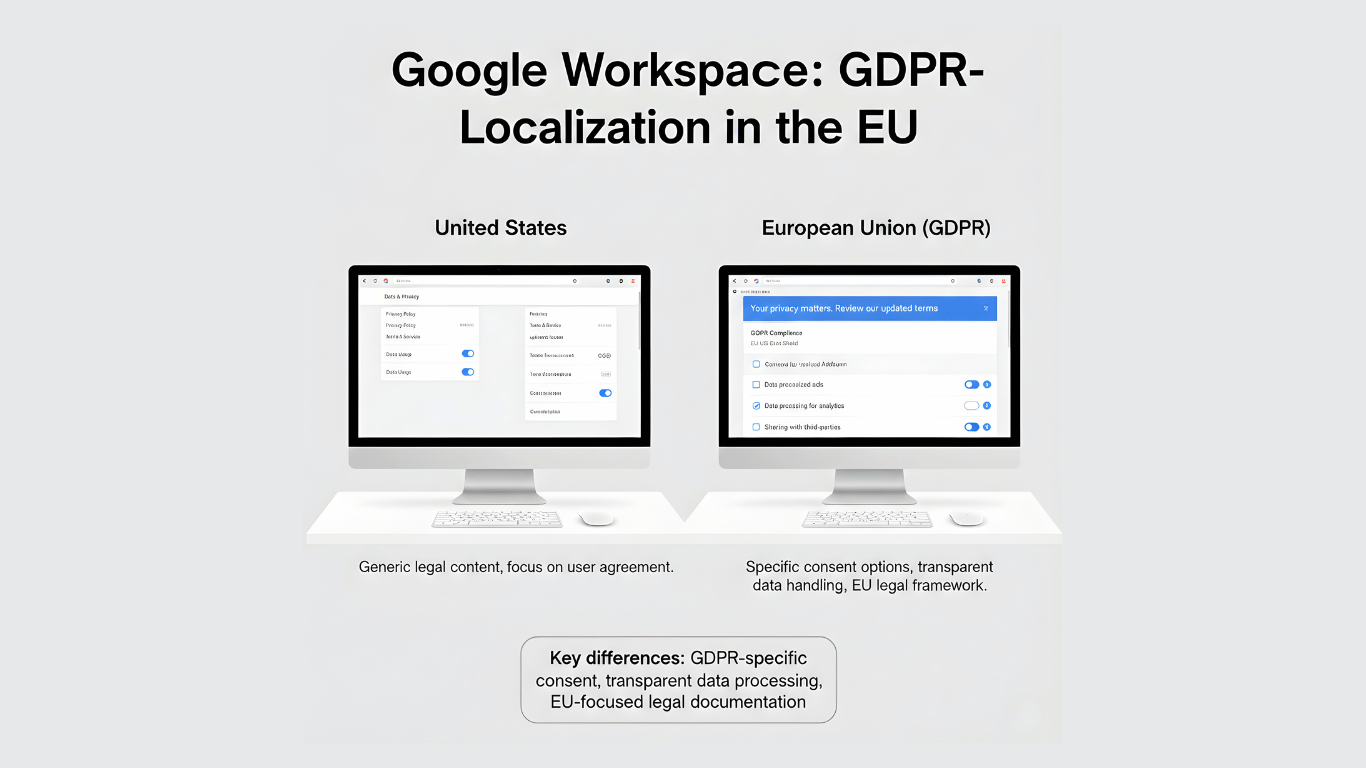
Google Workspace localizes its privacy policies and data handling practices for users in the European Union to comply with GDPR regulations. This includes providing clear consent options, transparent data usage explanations, and EU-specific privacy notices.
By adapting its legal content to regional regulations, Google ensures compliance while building trust with European users.
Multimedia Localization
Multimedia localization adapts videos, audio content, animations, and graphics for local audiences. This may include subtitles, voice-overs, or localized on-screen text.
Tone, timing, and cultural relevance are critical in multimedia content because it often creates a strong emotional impression.
Apple Product Demo Videos
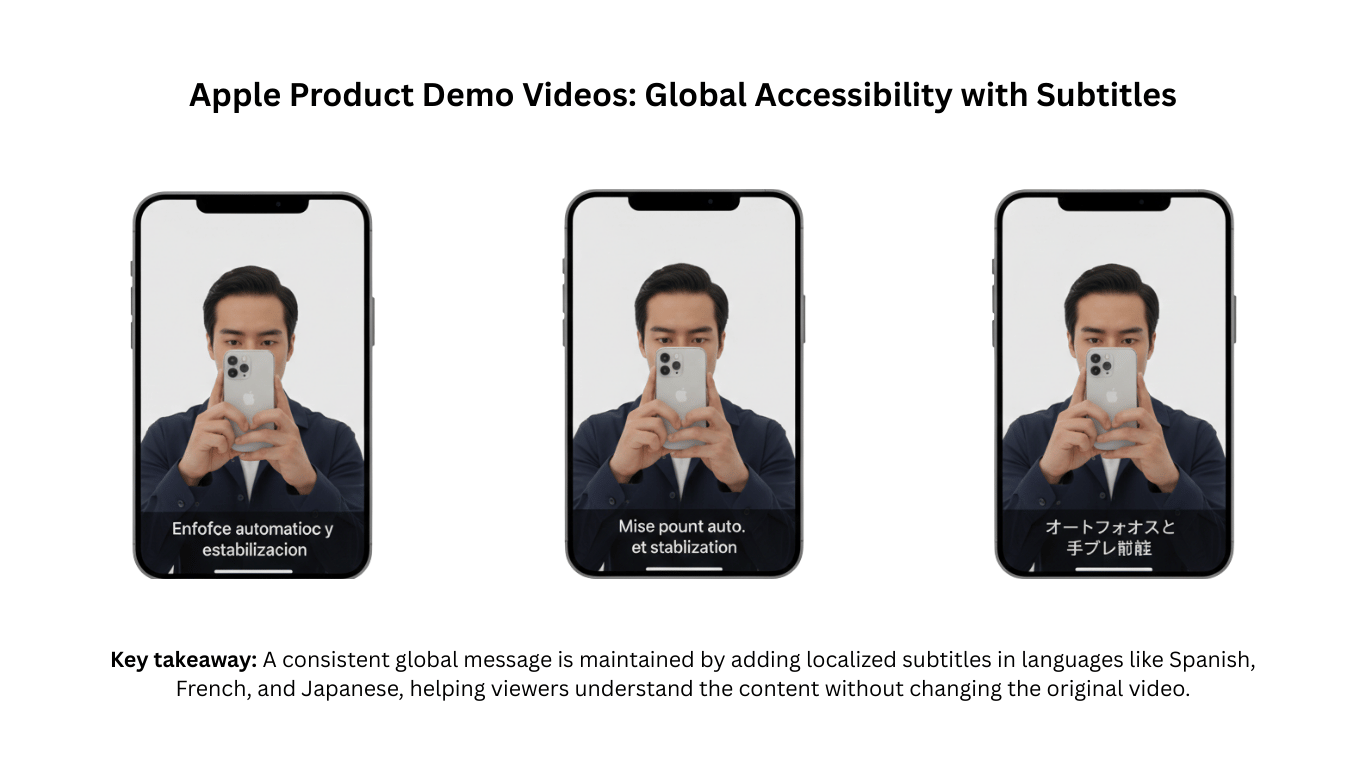
Apple localizes its product demo and launches videos by adding subtitles in multiple languages for different markets. For example, iPhone demo videos include subtitles in languages such as Spanish, French, and Japanese, allowing viewers to clearly understand features and instructions in their native language without changing the original video.
This approach helps Apple deliver a consistent global message while making the content accessible and easy to understand for local audiences.
Game Localization
Game localization is a highly specialized type of localization that combines linguistic, cultural, and technical adaptation. It includes dialogue, menus, tutorials, and in-game instructions.
Storytelling, humor, and character interactions often require careful localization to maintain immersion and enjoyment.
Skyrim Game Localization

Skyrim, the popular role-playing game, localizes character dialogue, quest text, and item descriptions for different regions. For example, the game provides fully dubbed voiceovers and translated dialogue in languages like German, French, and Japanese, adjusting cultural references and idioms so conversations feel natural to players in each market.
This approach makes the game immersive and culturally relevant for a global audience.
Conclusion
Each type of localization focuses on a different part of the user experience, but all of them work together to make products feel local rather than foreign. Linguistic, cultural, technical, and functional localization are not optional extras; they are essential for global success.
By understanding and applying the right types of localization, choosing wisely between human vs. AI translation, and addressing localization strategically, you are far more likely to succeed internationally.
FAQ
What is a real-world example of cultural localization?
A clear example of cultural localization is adapting visual design and messaging to match local cultural meanings. For instance, a global brand may change its color usage, imagery, or promotional themes when entering a new market to align with local traditions, values, and symbolism. This helps the brand feel respectful and relatable to local audiences.
Is there any difference between localization and localisation?
There is no difference in meaning between "localization" and "localisation." The difference is purely based on spelling. "Localization" is the American English spelling, while "localisation" is commonly used in British English. Both terms refer to the same process of adapting content or products for local markets.
Why is localization important for businesses?
The main purpose of localization is to make products and content feel natural to local users. Localization helps businesses:
- Build trust with international audiences
- Improve user experience and engagement
- Increase conversions and customer loyalty
- Avoid cultural misunderstandings or confusion
By addressing local language, culture, and expectations, localization supports long-term global growth.
How does Coca-Cola use localization in its marketing?
Coca-Cola is well known for its localization strategy. The brand adapts its advertising campaigns, slogans, and packaging to reflect local languages, festivals, and cultural moments. While the core brand identity remains consistent worldwide, local campaigns are designed to connect emotionally with regional audiences.
What are the main types of localization?
There are several important types of localization used by global businesses, including:
- Linguistic localization
- Cultural localization
- Technical localization
- Website localization
- Software and application localization
- Marketing localization
- E-commerce localization
- Legal and regulatory localization
- Multimedia localization
- Game Localization
Each type addresses a specific aspect of adapting products or content for local markets.